Tom Lee2026-09-15 12:34:16Tom Lee says rising AI debt does not mean the bubble must end badlyFundstrat co-founder Tom Lee said concerns are building around debt tied to AI infrastructure financing, but argued that expansion in high-growth industries has never relied entirely on equity capital. In his view, a rise in debt financing among AI companies does not automatically signal a broken business model or an imminent collapse in an AI bubble. Lee described AI as the "third engine" of economic growth. To make his point, he cited Bitcoin’s move from under $1,000 to about $80,000, saying investors often underestimate the long-term value and speed of adoption of new technologies in their early stages. Within that framework, he said Nvidia, semiconductors, memory, and energy and power assets constrained by computing expansion remain some of the more attractive ways to gain exposure to the AI investment chain. He added that the market will now be watching whether that debt can translate into lasting revenue, cash flow, and productivity gains.680
BIS2026-09-11 01:45:00BIS chief says debt-fueled AI spending boom could threaten financial stabilityBank for International Settlements General Manager Pablo Hernández de Cos said the fast-rising AI investment boom could become a risk to global financial stability if companies fail to deliver the returns investors expect. Speaking in remarks cited by CoinDesk, he said the world’s five largest technology companies plan to spend more than $1 trillion on AI projects in 2025 and 2026, while global AI-related investment could climb from about $500 billion today to $3 trillion-$4 trillion by 2030. He said capital spending by large AI companies is now running ahead of their own cash flow, with funding relying more heavily on debt and private credit. He also pointed to opaque and interconnected risks tied to what he described as circular financing links among chipmakers, cloud computing giants, and AI firms, including cross-shareholdings and compute purchasing arrangements. Hernández de Cos added that if AI returns fall short of expectations, the current capex boom could turn into an investment pullback, and a sharp correction in concentrated AI-linked stocks could weigh on household consumption through wealth effects and spread internationally because of the large weight of U.S. equities in global markets. He did not say an AI bubble must burst, and noted that AI has shown productivity gains in programming, consulting, and professional writing.880
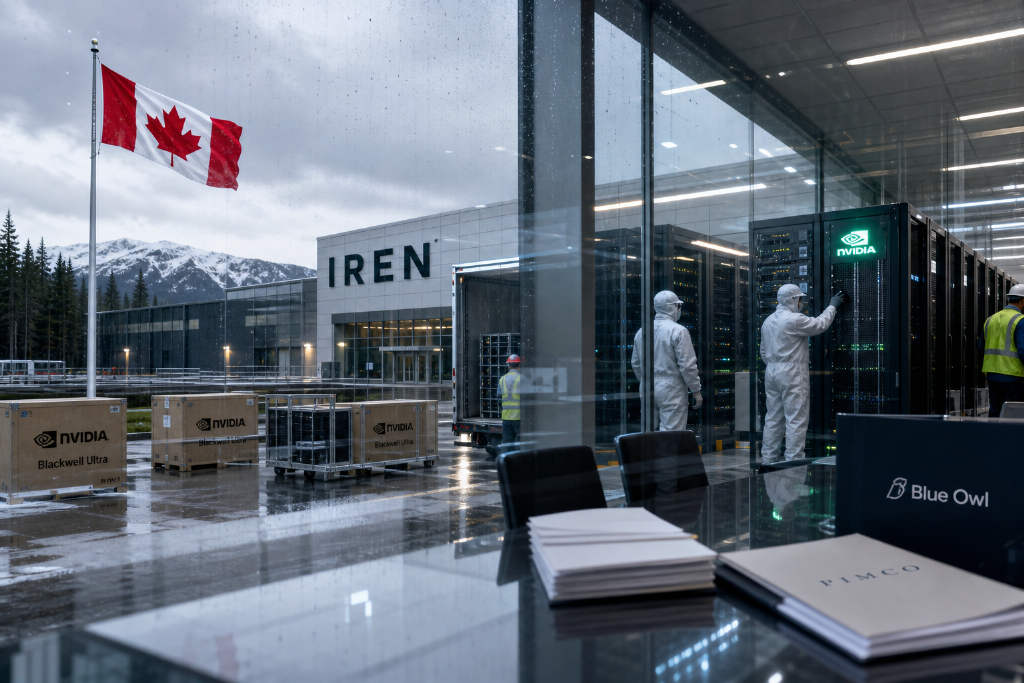
Blue Owl Capi2026-08-29 00:43:43Blue Owl-led $2.4 billion debt deal backs Iren’s Nvidia GPU purchasesA fund managed by Blue Owl Capital has led a $2.4 billion debt financing package for cloud computing provider Iren, according to Bloomberg. The proceeds are set to support Iren’s purchase of Nvidia Blackwell Ultra GPUs for its data center campus in Canada. The financing consists of a $1.2 billion senior secured term loan and an equal amount of senior secured notes, for a combined total of $2.4 billion. Documents cited in the report show the structure allows Iren to buy equipment in stages within a specified period, rather than all at once. Pacific Investment Management Co. is also listed as one of the backers on the deal. The documents show the financing carries a 9% interest rate and a term of two and a half years. The report ties the funding directly to hardware procurement for Iren’s Canadian data center buildout.1040
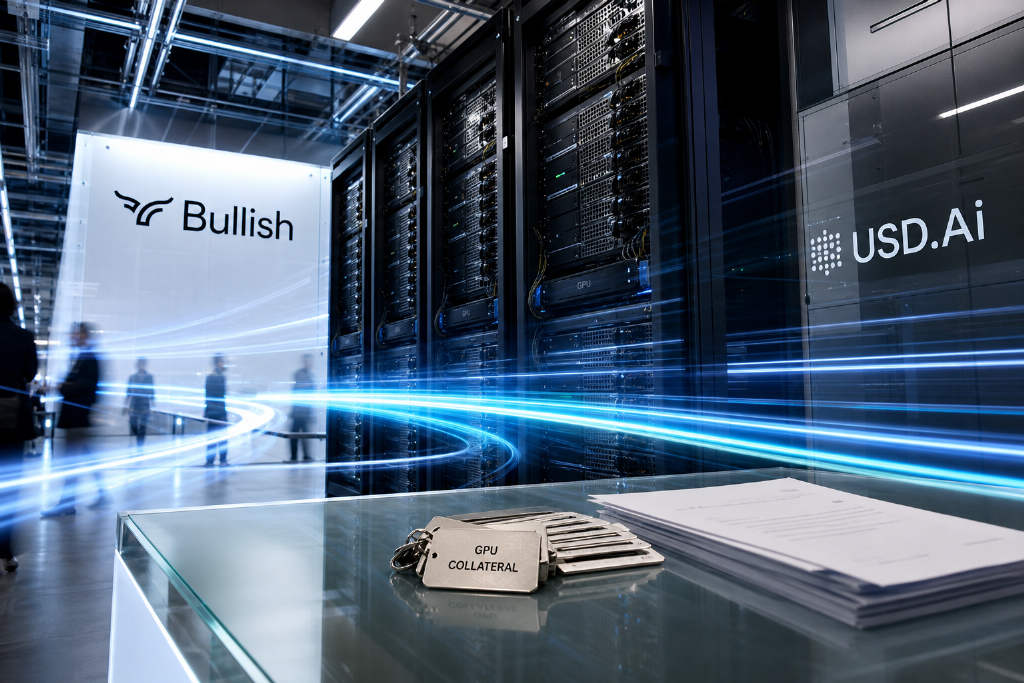
Bullish2026-08-28 11:04:09Bullish Provides $100M Debt Facility to USD.AI for GPU-Backed LoansBullish, a cryptocurrency platform, is providing a $100 million debt facility to USD.AI to finance GPU-backed loans for artificial intelligence infrastructure.840
JPMorgan2026-08-27 15:11:46JPMorgan said to seek $5 billion debt package for Volta AI data center buildoutBloomberg reported that JPMorgan has begun early talks with potential lenders on a $5 billion debt financing plan to back Volta Infra Holdings Ltd. as it builds artificial intelligence data centers, according to people familiar with the matter. The report points to a fresh funding push tied to AI infrastructure, where demand for computing capacity and chip access remains high. Volta AI, the report said, completed a $300 million venture capital round earlier this month at a $2.4 billion valuation. The company is aiming to help more technology firms gain access to expensive AI chip resources. The planned debt package and the earlier equity financing together outline how the company is stacking capital to support expansion in AI-related infrastructure.930
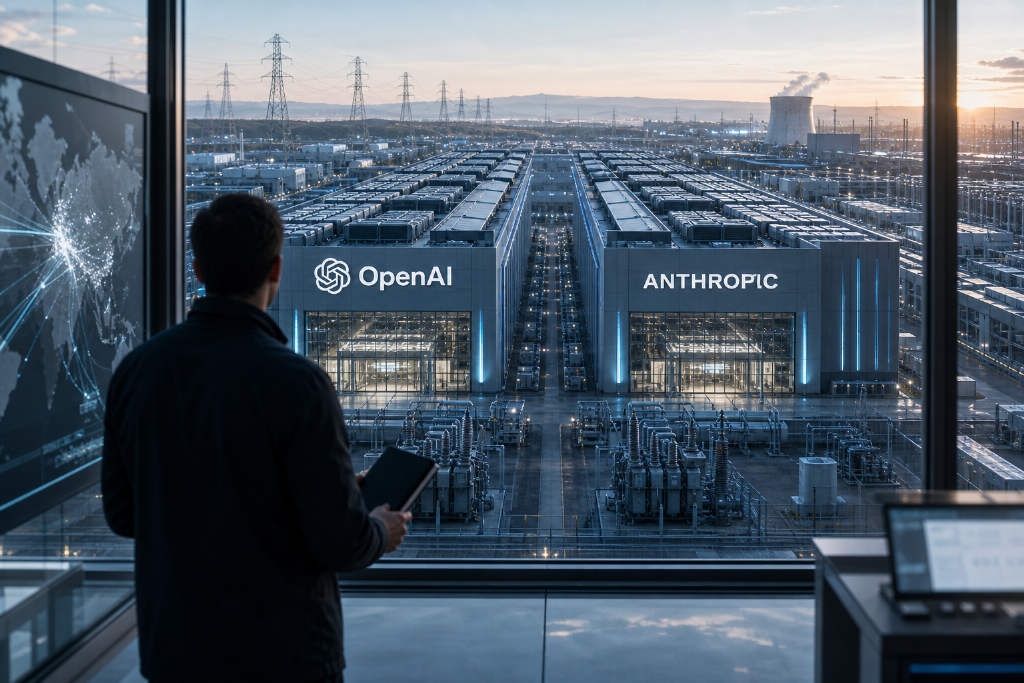
SemiAnalysis2026-08-26 08:52:54SemiAnalysis founder says most new AI compute could be concentrated in two companies by 2028SemiAnalysis founder Dylan Patel said in a recent podcast that OpenAI and Anthropic could control 70% to 80% of the world’s newly added AI compute by 2028, with combined compute capacity potentially exceeding 100GW. Patel said the two companies already account for about 30% of annual new compute added globally, and that share is still rising quickly. He also argued that the business model for frontier AI labs is shifting as the revenue generated per unit of compute improves sharply. According to Patel, Anthropic is currently generating about $50 million in revenue per megawatt of compute, and that figure could climb to $100 million. That, he said, would allow OpenAI and Anthropic to buy or lease compute at prices of $25 million to $50 million per megawatt. Patel also projected that global AI-related capital spending will reach about $11 trillion from 2024 to 2029, with more than $5 trillion of that total likely requiring debt financing. He added that higher expected returns from AI infrastructure could lead tech giants to accept higher funding costs, putting pressure on overall credit rates, traditional asset valuations, and highly indebted economies.930
Metaplanet2026-08-13 15:35:09Metaplanet launches BitBonds to keep buying Bitcoin, CEO says 5,000 BTC transfer was not a saleMetaplanet, the Japanese listed company often compared with MicroStrategy in Asia, has moved to debt financing after its common-share issuance route was constrained by its own mNAV policy. According to CryptoSlate, the company has used nearly 83% of its $500 million credit line, or about $414 million, and raised its Bitcoin holdings to 43,000 BTC. It still says it is working toward a year-end target of 100,000 BTC. The company also addressed market speculation around a transfer of more than 5,000 BTC, valued in the report at roughly $322 million. CEO Simon Gerovich said on Aug. 12 that the movement was a routine custody operation, not a sale, and added that the network fee was about $8. Metaplanet said its total holdings remained unchanged at 43,000 BTC. Its latest financial results for the first half of 2026 showed a net loss of 182.77 billion yen, driven almost entirely by a 184.3 billion yen non-cash valuation loss tied to Bitcoin’s decline in yen terms. Excluding that accounting effect, operating profit came to 3.33 billion yen on revenue of 4.94 billion yen. On Aug. 13, Metaplanet said it completed issuance of its 21st to 24th unsecured ordinary bond series under the BitBonds label, raising about 200 million yen with a roughly three-year term and annual coupons of 4.0% to 4.3%.1720
AI2026-08-07 00:20:16AI debt caution spreads to data center CMBS as Pure DC drops planned €1 billion bond saleInvestor caution toward AI-linked borrowing is showing up well beyond the largest funding markets. According to people familiar with the matter, two of the past three commercial mortgage-backed securities deals tied to data center financing had to widen pricing from initial discussions to draw enough demand, including offerings linked to KKR-backed CyrusOne and Blackstone-backed QTS Realty Trust. Over the past 12 months, risk premiums for CMBS tied to data centers have also risen across the board. That shift was underscored in mid-July when Oaktree Capital-backed UK data center operator Pure Data Centres, or Pure DC, abandoned a planned record €1 billion unsecured bond sale and turned instead to bank financing. The company had been marketing the bond while signs were emerging that investor appetite for AI-related data center debt was weakening. At the same time, CoreWeave’s sharp declines in stock and bond prices following news that Meta was building out its own cloud infrastructure made buyers more careful on terms. Pure DC ultimately concluded that the parallel bank loan option offered better conditions. The move reflects a broader repricing. Some investors are starting to treat AI data centers more like traditional office and retail property risk, focusing on overbuilding, tenant concentration and the chance that technological change could erode asset values.2020